Symbolic communication
Lexigrams provided a visual channel through which Kanzi could make requests, choices, and combinations of symbols.
Source: Ape Initiative ↗Initializing interface
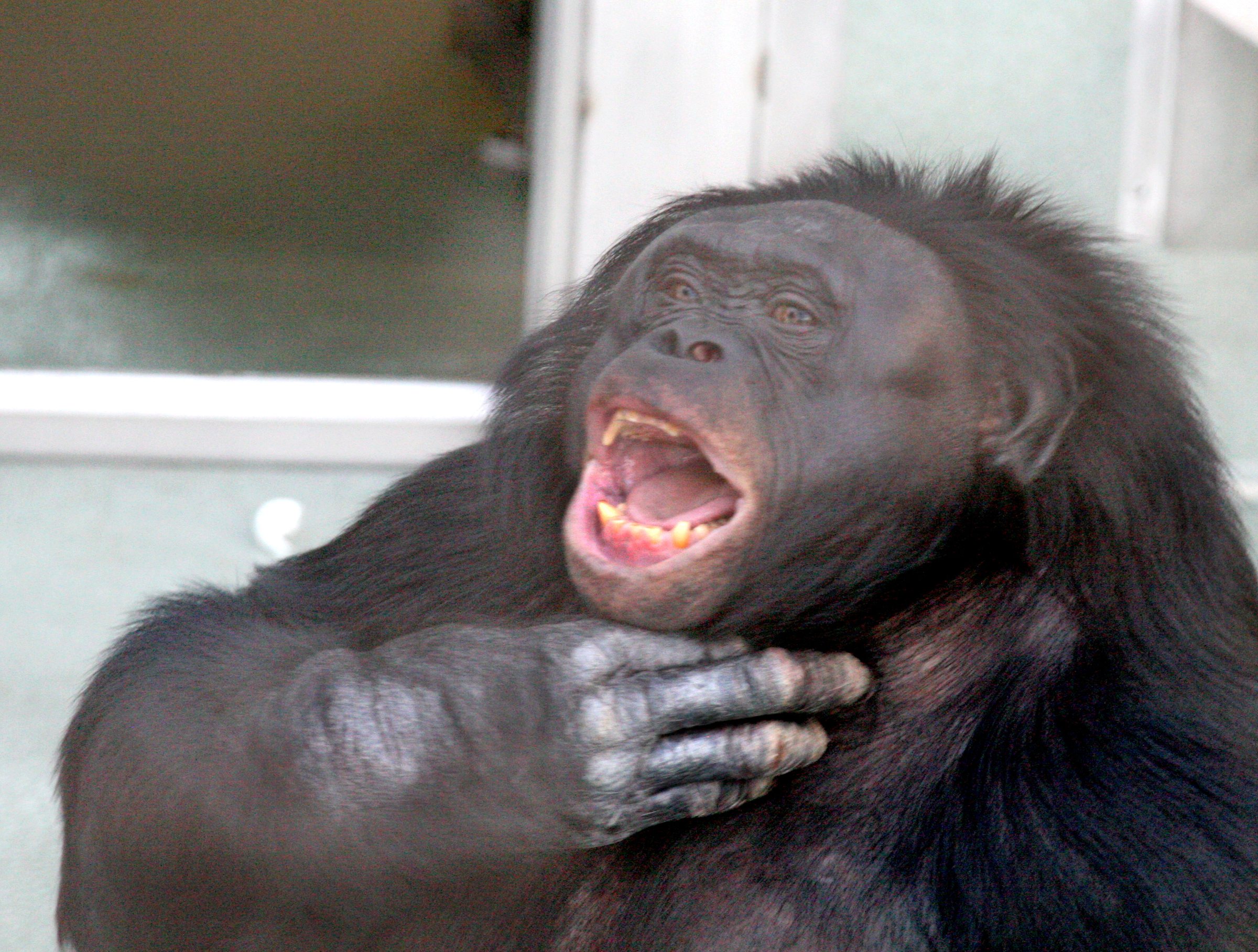
A signal was received.
It changed how we understood intelligence.
In memoriam
1980—2025
A life that expanded our understanding of intelligence, communication, and the minds of other species.
Kanzi was a bonobo whose life became central to decades of research and public discussion concerning animal cognition, symbolic communication, spoken-language comprehension, observational learning, and tool use. This independent memorial by Petrutban Technologies examines his life, scientific legacy, evolutionary context, and the distinction between biological and machine intelligence.
A remarkable life
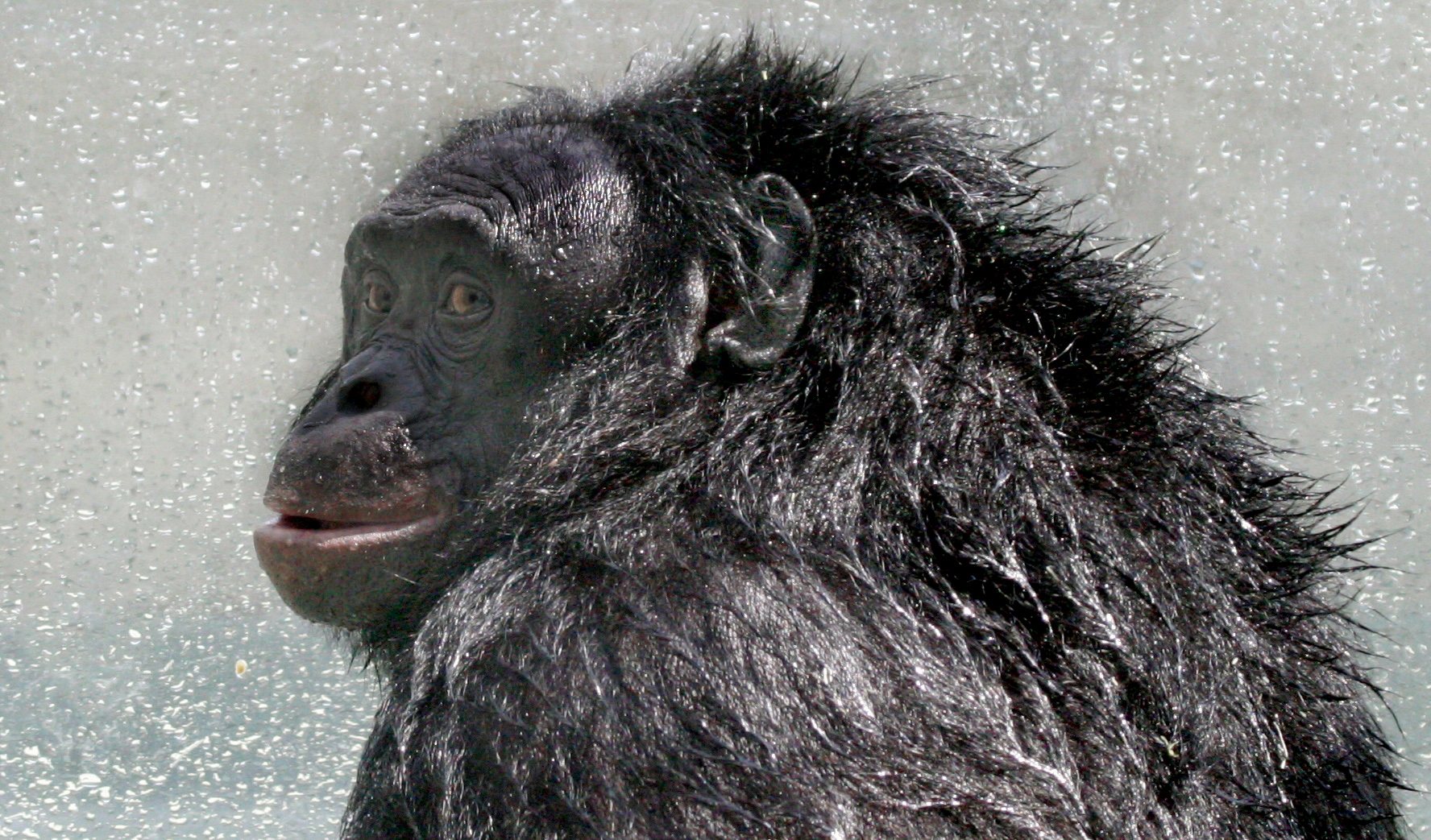
Kanzi was a bonobo born on October 28, 1980. At six months old, he was adopted by Matata and would later become one of the most widely known and extensively studied bonobos in the history of animal cognition research.
He became known for using a system of abstract visual symbols called lexigrams. Researchers also studied his responses to spoken English, his ability to follow unfamiliar instructions, his problem-solving behaviour, and his use of tools.
Kanzi died on March 18, 2025, at the age of 44.
His importance did not come from being identical to a human or from possessing human language in its complete form. His importance came from the questions his life compelled researchers to examine more carefully.
Symbolic communication
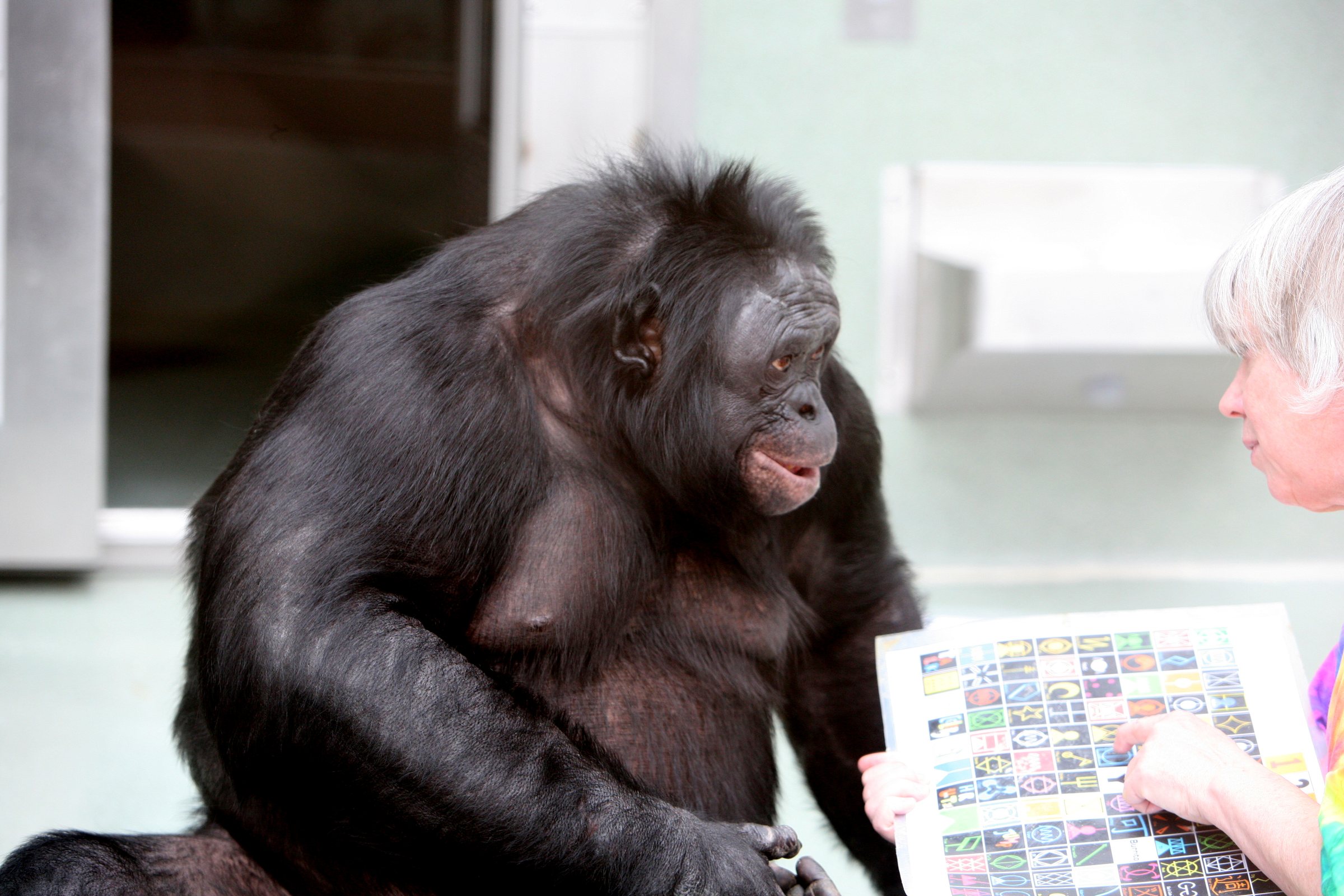
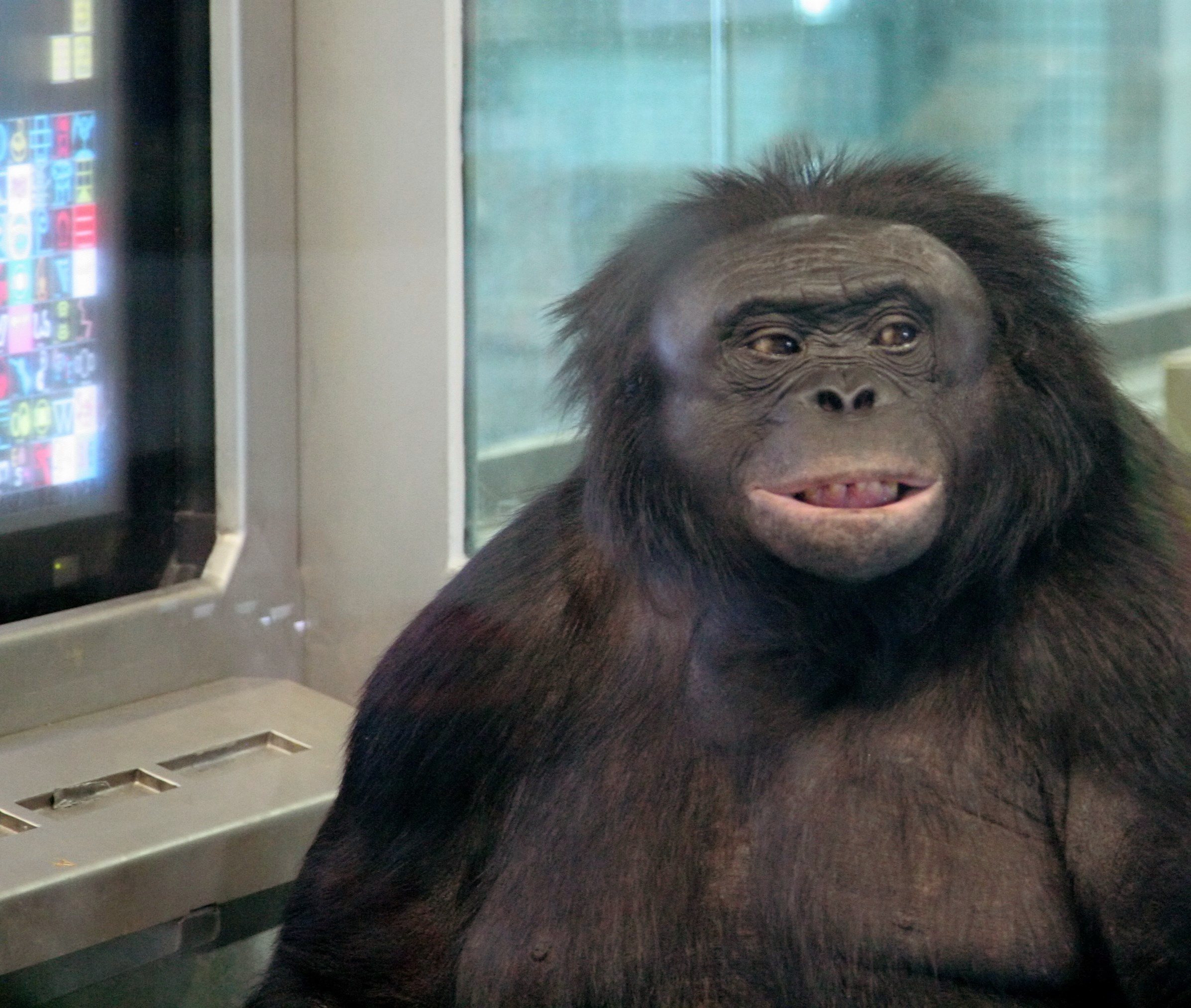
Kanzi communicated with researchers and caregivers through lexigrams: abstract symbols associated with objects, actions, places, and other concepts.
He did not initially learn the system through conventional structured instruction. According to accounts of the research, Kanzi appeared to acquire parts of it while observing attempts to teach his adoptive mother, Matata.
His use of these symbols became one of the most widely discussed examples in research concerning communication between humans and other great apes.
The geometric symbols in this memorial are original and function only as a visual metaphor. They do not reproduce the lexigrams used in research.
The communication field
It emerges through connection.
Understand
Researchers examined Kanzi’s ability to respond to spoken instructions, including combinations he had not previously encountered in exactly the same form.
These observations contributed to a larger scientific discussion about whether some components involved in language comprehension may have deeper evolutionary origins than previously assumed.
The interpretation of great-ape language research remains scientifically debated. Kanzi’s legacy should therefore not be reduced to the exaggerated claim that he “spoke exactly like a human.”
His real contribution was more meaningful: he demonstrated that the cognitive distance between humans and other great apes is more complex than a simple dividing line.
Lexigrams provided a visual channel through which Kanzi could make requests, choices, and combinations of symbols.
Source: Ape Initiative ↗Responses to novel instructions contributed to the debate about the boundaries and origins of linguistic comprehension.
Source: Smithsonian Magazine ↗Kanzi learned through observation, interaction, repetition, exploration, and relationships with the individuals around him.
Source: Ape Initiative ↗Planning, experimentation, and adaptation are not capacities expressed exclusively by humans.
Continue in the archive ↓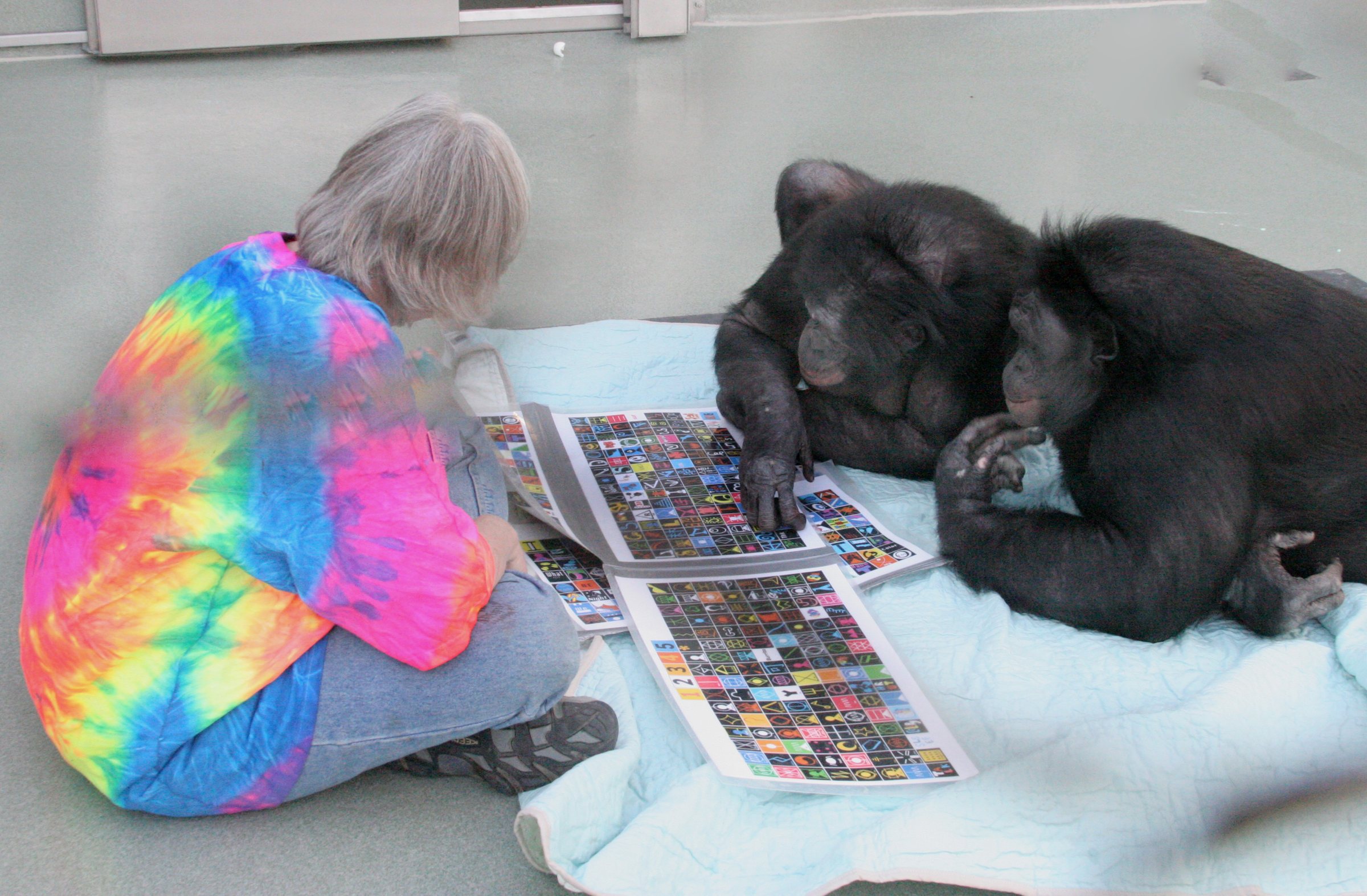
An unrepeatable history
Kanzi’s life offered researchers an unusual opportunity to observe the development of communication and cognition over several decades.
A research history this extensive cannot simply be reproduced by studying another individual. Every animal has a different developmental history, personality, social environment, and relationship with caregivers.
Tools and problem solving
Kanzi also participated in research involving the intentional use and production of tools.
These abilities did not make him human. They showed that planning, experimentation, adaptation, and purposeful interaction with physical objects are not restricted entirely to our species.
His behaviour helped add to the evidence that intelligence is not a single capacity possessed in full by one species and absent from every other.
Intelligence is composed of many capacities, expressed differently across living beings.
An evolutionary connection
Kanzi’s life did not establish the history of human evolution. It offered, however, a living example of the cognitive continuity between humans and other great apes.
Kanzi’s abilities do not, by themselves, prove human evolution. They illustrate cognitive similarities between humans and other great apes that are consistent with the broader scientific evidence for common ancestry.
Modern humans did not evolve from the chimpanzees, bonobos, or monkeys living today. Instead, Homo sapiens and other living great apes descend from shared ancestral populations that existed millions of years ago.
Genetic evidence, the fossil record, comparative anatomy, and observed behaviour together show that humans are part of the primate evolutionary tree.
Kanzi’s communication, learning, tool use, and problem-solving abilities provide an important example of how some cognitive capacities may have evolutionary origins that predate Homo sapiens.
These similarities do not mean that bonobos think exactly like humans. They indicate that some of the foundations of communication, social understanding, learning, and tool use may have existed in earlier ancestral populations and later developed differently across separate evolutionary branches.
Human evolutionary history also includes numerous extinct hominin species and genera, including Australopithecus, Paranthropus, and Homo.
Some of these populations may have contributed to the ancestry of later humans, while others represented related evolutionary branches that ultimately became extinct.
The history of human evolution is therefore not a straight line leading inevitably toward modern humans. It is better understood as a branching tree containing multiple populations, adaptations, migrations, and extinctions.
Kanzi’s life did not establish this evolutionary history. That history is supported by genetics, fossils, archaeology, and comparative biology.
Biological and machine intelligence
That distinction matters.
Kanzi’s legacy reminds us that intelligence should not be measured through performance alone. Communication, social understanding, embodiment, memory, curiosity, individual experience, and relationships all contribute to the phenomenon we call intelligence.
Artificial intelligence is created through engineered systems, computational models, training data, and human-designed infrastructure.
Biological intelligence developed through evolution, embodiment, survival, social interaction, and experience across many generations.
These forms of intelligence may sometimes produce superficially similar outputs, but they do not arise through the same processes and should not automatically be treated as equivalent.
The development of artificial intelligence should make us more curious about biological minds—not less respectful of them.
A mind encountered through patience, attention, and relationship.
A legacy that continues through research.
06 / Remember
The observations, research, questions, and conversations inspired by him continue beyond his lifetime.
His legacy remains present in scientific research, public discussions about animal cognition, and the continuing effort to understand how communication and intelligence developed across species.
Remembered for a life of learning, communication, and discovery.In memoriam
1980—2025
His life became part of our understanding of intelligence.
The signal continues.Independent memorial created by Petrutban Technologies.No affiliation with Kanzi’s caregivers, researchers, Ape Initiative, or associated institutions is implied.Explore sources and image credits →Factual claims are separated from interpretation. Great-ape communication research remains an active and debated field.
Kanzi was a male bonobo born on October 28, 1980, known for research involving lexigram communication, spoken-language comprehension, observational learning, and tool use. He died on March 18, 2025, at the age of 44.
Kanzi used lexigrams—abstract visual symbols associated with objects, actions, places, and other concepts—and, in certain experimental contexts, responded to spoken English instructions.
Researchers reported that Kanzi responded to numerous words and some novel instructions. The precise interpretation of these results, and the degree to which they resemble human language, remain subjects of scientific debate.
Lexigrams are arbitrary graphic symbols created to represent words or concepts. They are neither pictures of objects nor a natural alphabet; their meaning is learned through use and association.
Kanzi’s life gave researchers decades of observations concerning the cognition of another species and complicated the idea of a simple boundary between human intelligence and that of other great apes.
No. A single individual cannot prove human evolution. Kanzi’s behaviour is consistent with the cognitive similarities expected between related species, while evolution and common ancestry are supported by genetics, fossils, comparative anatomy, and other fields.
Humans and bonobos are different branches of the primate tree and descend from shared ancestral populations. Humans did not evolve from bonobos living today.
His legacy consists of the data, questions, and debates generated about communication, comprehension, learning, tool use, imagination, and the evolutionary origins of cognition.
Kanzi: An Ape of Genius
The four videos are external YouTube uploads presented in their series order. The player is loaded only after the visitor presses Play.
Availability, advertising, captions, and embedding permission are controlled by YouTube and the material’s rights holders. Petrutban Technologies neither hosts nor claims rights to the videos.

Documentary film / external archive
The opening chapter introduces Kanzi and the long-term research carried out with Dr. E. Sue Savage-Rumbaugh at the Georgia State University Language Research Center.
Open video on YouTube ↗
Documentary film / external archive
The documentary continues with Kanzi’s social world, learning history, and interactions with Matata and the research team.
Open video on YouTube ↗
Documentary film / external archive
The third chapter continues the archival account of Kanzi’s communication, comprehension, and everyday research sessions.
Open video on YouTube ↗
Documentary film / external archive
The concluding chapter follows later demonstrations and the questions Kanzi’s abilities raised about language, learning, and cognition.
Open video on YouTube ↗Biographical and scientific information has been independently summarised and rewritten. No Wikipedia paragraph has been reproduced verbatim.
The official memorial announcement concerning Kanzi’s death.
View source ↗Source 02Ape InitiativeOfficial biographical information about Kanzi’s life, family, and communication.
View source ↗Source 03Ape InitiativeAn explanation of the symbol system used by bonobos to communicate choices and requests.
View source ↗Source 04Smithsonian MagazineAn extensive examination of Kanzi, lexigrams, spoken-language comprehension, and the scientific debate.
View source ↗Source 05Smithsonian MagazineHistorical reporting about Kanzi’s communication and use of lexigrams.
View source ↗Source 06Smithsonian Human Origins ProgramGenetic evidence and context about the evolutionary relationship between humans and other great apes.
View source ↗Source 07Smithsonian Human Origins ProgramClarifications about common ancestry and why humans did not descend from living apes.
View source ↗The photographs and their adaptations are distributed under the Creative Commons Attribution-ShareAlike 4.0 International licence. Petrutban Technologies’ original editorial content is separate from these licensed works.